
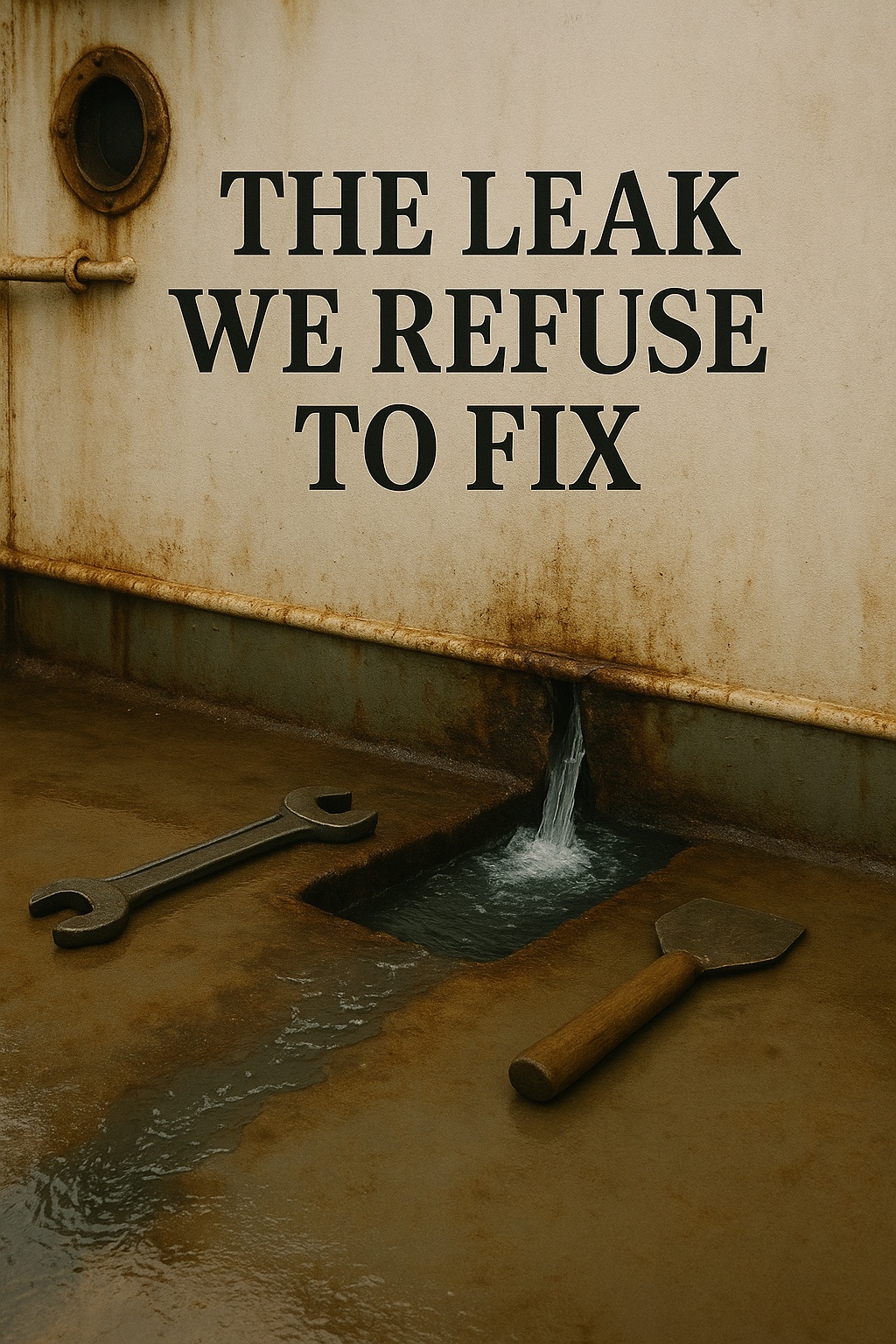

When silence becomes complicity, critics become our last lifelines.
🎣 The
Vessel and the Silence
A group set out at dawn to fish, their
vessel slicing gently through the misty water. It wasn’t new—its sides bore the
bruises of many voyages—but it had always managed to float. And so, they
trusted it.
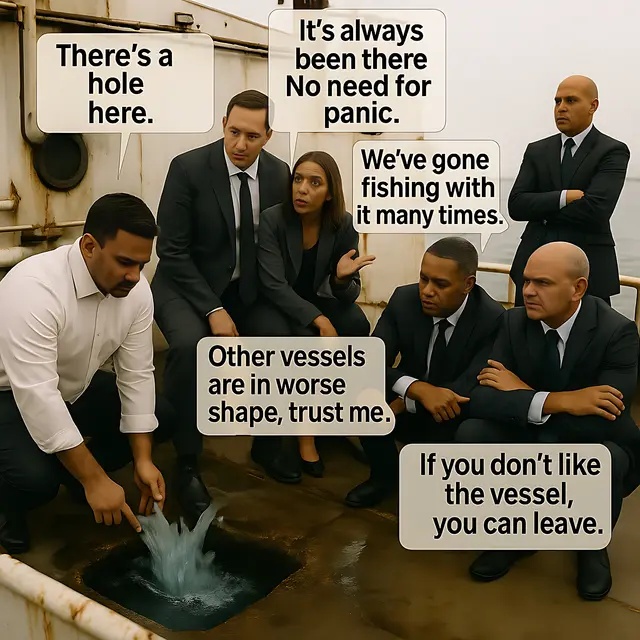
The passengers were a mixed bunch—professionals from different fields. They carried themselves with composed ease, their conversation light and unhurried. They chuckled quietly—confident in their course, steady in their comfort. But not all was calm. From the side, a splash. Then another.
One man crouched low, his eyes wide. He
pointed urgently at the water sloshing in from a gaping hole, and called out to
the others.
“There’s a hole here,” he said firmly. “The vessel is taking in a
lot of water!”
The others looked—briefly. They blinked.
Then came the responses—not with urgency, not with action, but with the dull
rhythm of denial, like actors in a play no one dared rewrite.
“It’s always been there,” one muttered, barely glancing at the
splash. “No need for panic.”
“We’ve gone
fishing with it many times,” added another, waving dismissively. “It has always
worked.”
A third leaned back, scoffing.
“Other
vessels are in worse shape, trust me. We’re still afloat, aren’t we?”
Then, from the side, came a voice colder
than the wind:
“If you don’t like the vessel, you can leave. You’re welcome to join
another.”
And yet—one said nothing at all. He sat
motionless, arms folded, watching the water rise with a knowing stare. His
silence wasn’t ignorance. It was complicity, dressed as calm.
Meanwhile, the man at the side kept
staring at the hole, hands hovering helplessly over the growing pool.
Desperate. Frustrated. Alone.
Not because
the vessel was leaking—
But because no one else would admit that it was.
And none were willing to help fix it.
This story, a narrative adaptation of an anonymous cartoon of professionals in a leaking boat, reflects the realities of leadership, management, and politics—where warnings are too often dismissed, critics silenced, and the real danger is not the damage, but the denial.
💼 Denial in Power: The Cost of Looking
Unbothered
The leaky vessel in the story is more
than a metaphor. It is a mirror. In leadership and management, there is a
peculiar addiction: the obsession with looking unshaken. Not the noble kind of
grace under fire—but the hollow performance of calm while standing in a rising
tide.
To admit a
fault is to risk reputation.
To acknowledge a leak is to invite accountability.
To listen to a critic—especially one outside of the circle—is to hand them
legitimacy.
And for many in power, that feels far more dangerous than the water flooding in. So, instead, we master the art of the composed illusion.
We adjust our ties while the deck tilts.
We draft responses and press releases to justify the situation as if nothing’s
wrong. We polish the wood while the water rises. We grin for the camera as the
hull splits below.
Because in many institutions, business,
even families—image too often trumps introspection. The optics of order matter
more than the reality of the rot beneath. No one wants to be the one who breaks
the spell. And so, the spell holds—until the vessel can hold no more.
🧠 Critics as Lifelines, Not Enemies
Imagine an activist raising concerns over
a policy issue. An analyst publishing a report that exposes inefficiency. A
civil society group drawing attention to injustice. Almost reflexively, labels
are cast:
“They’re
spreading misinformation.”
“They’re trying to destabilize what’s working.”
“They just hate success.”
“They’re conspiracy theorists.”
The irony? In the story of the vessel, the man shouting about the hole isn’t trying to sink the ship—he’s trying to save it. Yet, he is often the first to be dismissed.
Many times, the one who sounds the alarm is seen not as a guardian, but as a nuisance. His voice is inconvenient. His concern interrupts the cruise.
Those who speak up—whether activists, influencers,
researchers, or concerned individuals—are painted as disloyal, disruptive, even
dangerous. Some are politely told to step aside. Others are openly pushed out.
They are told: “If you don’t like the vessel, you can leave.”
As if throwing the mechanic overboard would fix the engine. As if ignoring the leak would magically seal it shut. Systems don’t collapse because of noise. They collapse because of silence.
Because, those who knew better chose comfort over courage. Those who raised alarm were silenced instead of supported. To question is not to destroy. Dissent is not betrayal. It is, in fact, the highest form of care.
The critic is not the enemy of the
system—they are its conscience. They are the ones reaching for a patch while
others reach for excuses. They offer not ruin, but repair.
Yet, in too many institutions, it is
safer to applaud dysfunction than to confront it.
And so, like the man in the
vessel, the critic remains alone—desperate, unheard—not because the leak can’t be
fixed, but because no one else is willing to admit that it’s real.
🙊 The Danger of Strategic Silence
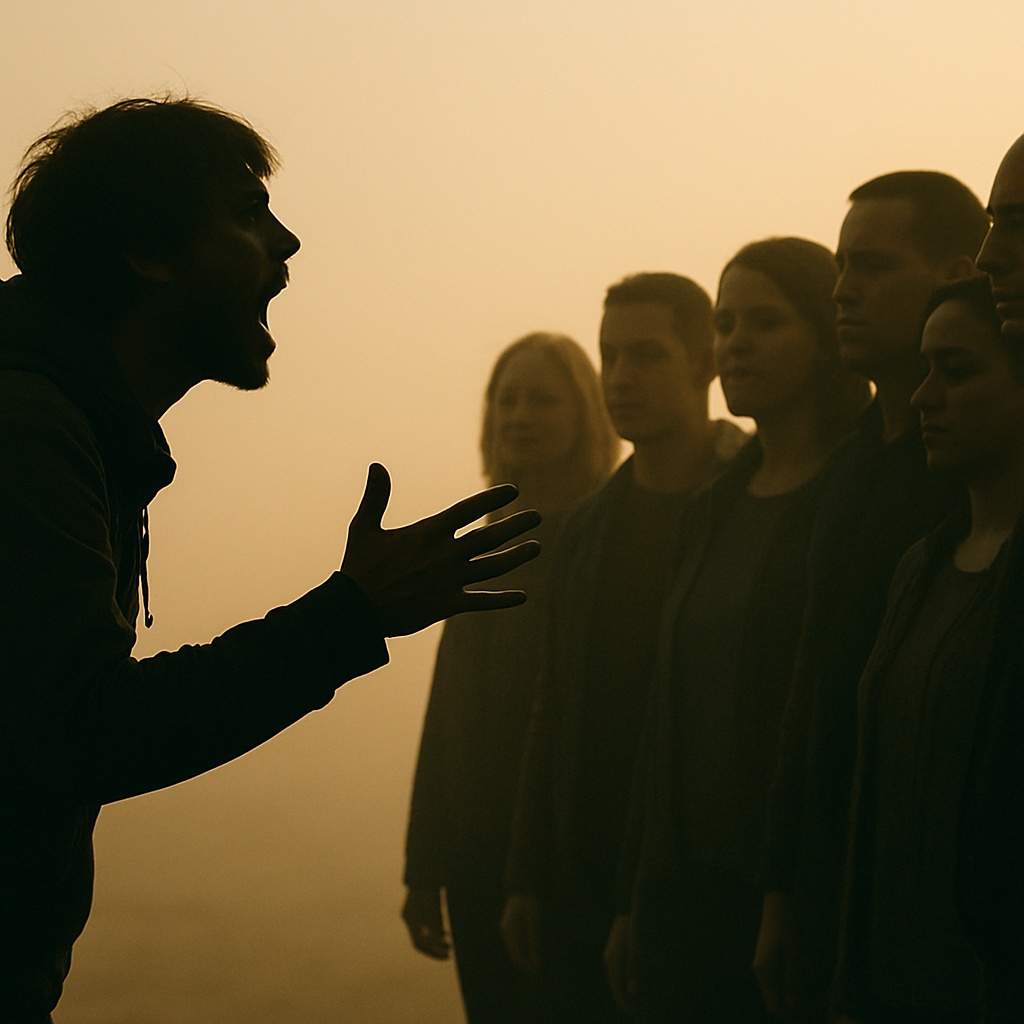
Perhaps
the most haunting figure in the vessel isn’t the one who scoffs… or the one who
deflects… It’s the one who says nothing when it matters
most.
He sees the water pooling at their feet.
He hears the warning, clear as day.
He knows—without doubt—that the vessel is leaking.
But he stands still. Arms folded. Eyes
steady. No alarm. No action. No word. This is the face of complicity—not
through active harm, but through passive permission.
In many instances, this character is all
too familiar.
The official
who nods in quiet agreement but signs off anyway.
The media house that edits truth into silence.
The citizen
who stays quiet while power escapes scrutiny.
The partner who agrees in private but vanishes in public.
The manager who whispers, “You’re right,” in the hallway—yet remains mute in
the meeting.
They do not deny the hole. They do not
question the facts.
But, they fear the consequences of truth more than the
consequences of inaction.
And so, they float along—stoic and
still—while the water rises.
But, here’s the truth they hope no one notices:
A
leak unacknowledged becomes a flood. What begins as silence ends as sabotage.
History does not excuse the quiet bystander—it remembers them as part of
the failure.
In any story of a leaking vessel, it is
not only the deniers who are to blame. It is also those who saw the danger and
said nothing.
Because when a system drowns, it is not
only from the weight of its cracks—
But from the voices that chose comfort over
courage.
🧨 From Leak to Collapse
History has no shortage of sunken vessels—grand ships once hailed as unsinkable, remembered only as cautionary tales. They didn’t go under because of storms. They collapsed under the weight of their own denial.
Consider a thriving society—
Economies built on shaky policies and inflated confidence. Early tremors came
in the form of rising debt, waste, and unsustainable fiscal policy. Different
experts and concerned individuals warned. Analysts cautioned. But the alarms
were dismissed as doom-saying.
Then came the crash. The economy collapsed. Jobs vanished. Families lost their homes and livelihoods. The system sank into recession.
The leak had been visible for years— ballooning
deficits, risky derivatives, widening inequality. But the illusion of perpetual
growth was too intoxicating. And belief in the system’s
invincibility shouted louder.
Now picture a nation poised with promise—
Where peaceful protests rang through the streets, asking only to be heard. But
instead of listening, leaders dismissed, delayed, denied. Until those unheard
voices exploded into revolution— not out of malice, but because they had no
other place to go.
These collapses are rarely born in a moment. They are usually slow drownings; long in warning, short in response. Enabled by arrogance and inertia.
Because, it’s never the hole
alone that sinks the ship. It’s the
refusal to patch it—
The meetings where truth was avoided.
The moments when courage was needed, but comfort was chosen.
The vessel goes down—not in ignorance,
but in full awareness. Not because no one saw the leak.
But, because those who
could fix it… refused to try.
🛠️ Critics Are Repairmen, Not Rivals
What then becomes of the one who dares to speak— the one who points at the rising water?
We must relearn this truth: The loud
voice may be inconvenient, even uncomfortable— but it often carries the wisdom
that can save the whole.
Critics are not saboteurs. They are not
enemies of the system.
They are its conscience—its early
warning signal, its moral compass, its last chance at repair.
They are the ones who see what others
pretend not to.
Who speak when it would be easier to stay silent.
Who care
enough to risk being unpopular—just to keep the vessel afloat.
It is not the one who questions that we
should fear. It is the one who cannot be questioned.
It is the institution that
labels dissent as disloyalty. The system that prefers applause to
accountability.
True leadership is not the art of
denial. It is the courage to admit what’s broken—and the will to fix it. Not
the polished speech, but the patched-up hull. Not the illusion of calm, but the
work of repair.
Because, in the end, when the
water is rising and the vessel groans, it won’t be silence that saves us—
It will be the one who dared to speak up...
And
the few who finally listened.
🎯 Final Thought
Every vessel, no matter how grand, would
have a crack at some point.
No system is perfect. No institution invincible.
But, cracks don’t sink a ship—denial does.
The real danger is never in the
damage itself. It lies in pretending the damage doesn’t exist.
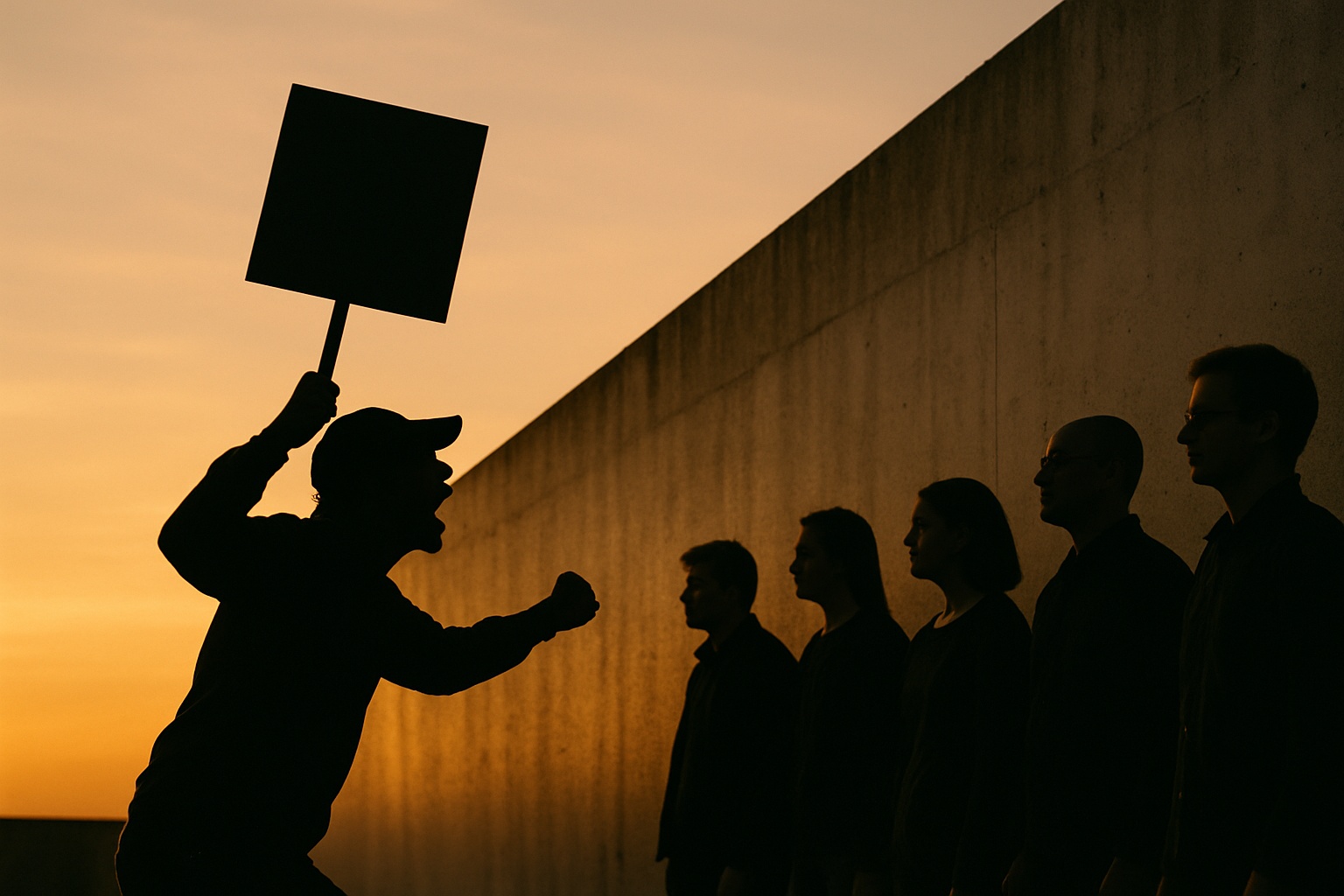
So, we should listen—listen closely—to
the ones who point to the hole.
They may be
inconvenient.
They may not have titles or polished arguments.
But, they just might be the only reason the system stays afloat.
Because, when the water rises, it doesn’t
ask who held the highest rank. It doesn’t care who gave the best explanations. It
won’t remember who had the best coverup.
History only remembers who tried
to fix the leak.