
 The Rain of Illusion
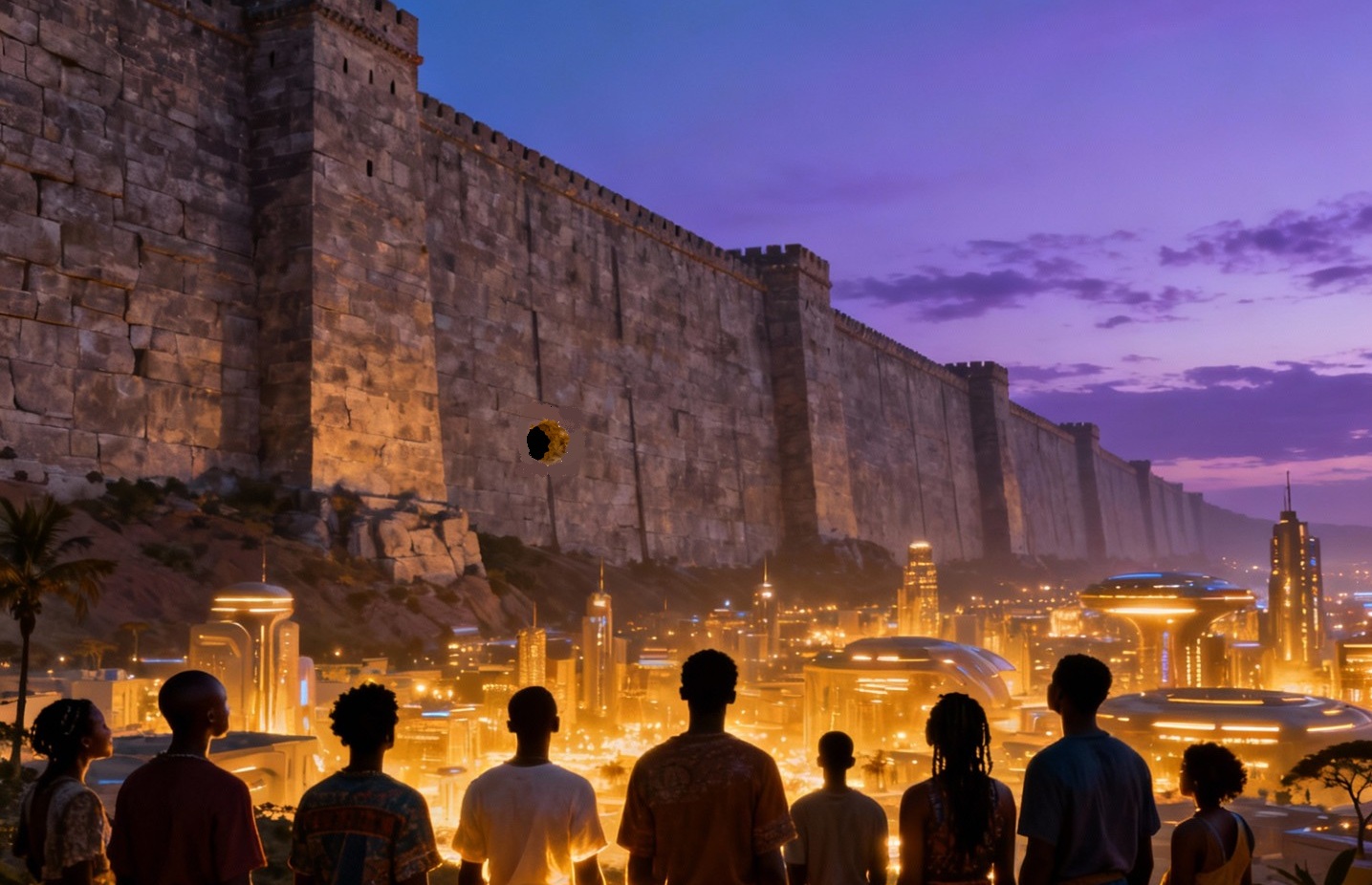
The city of Dryden lived next to the city
of Riverton, but a tall stone wall
separated the two. The wall was so high that people of Dryden could never see
what life was truly like in Riverton.
So, over time, speculations grew. Some
in Dryden imagined Riverton
as a land of endless rivers. Others believed Riverton was rich with forests,
where trees dripped with honey. A few claimed Riverton’s soil was rich with
fertility, while their land, Dryden, remained cursed with dust.
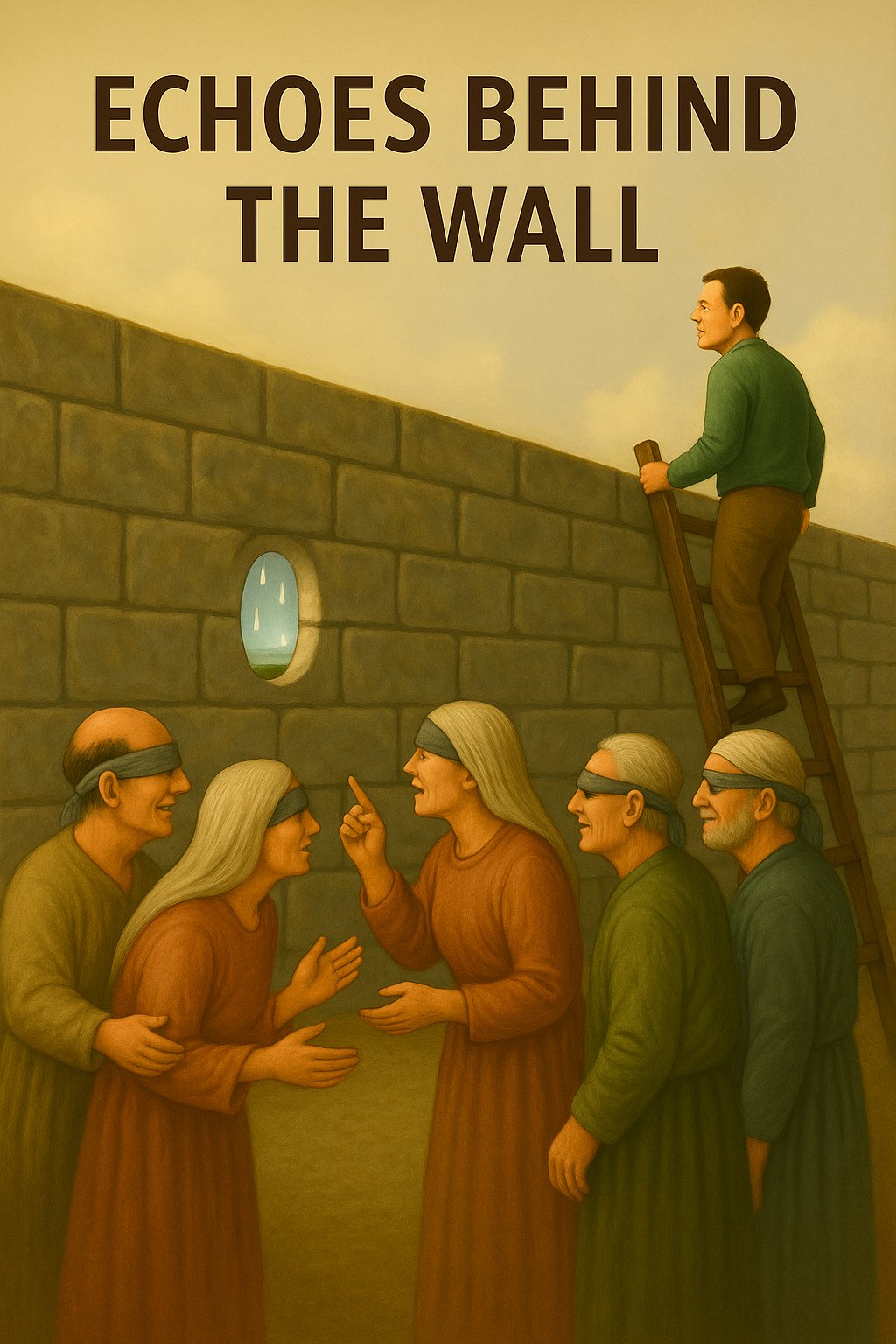
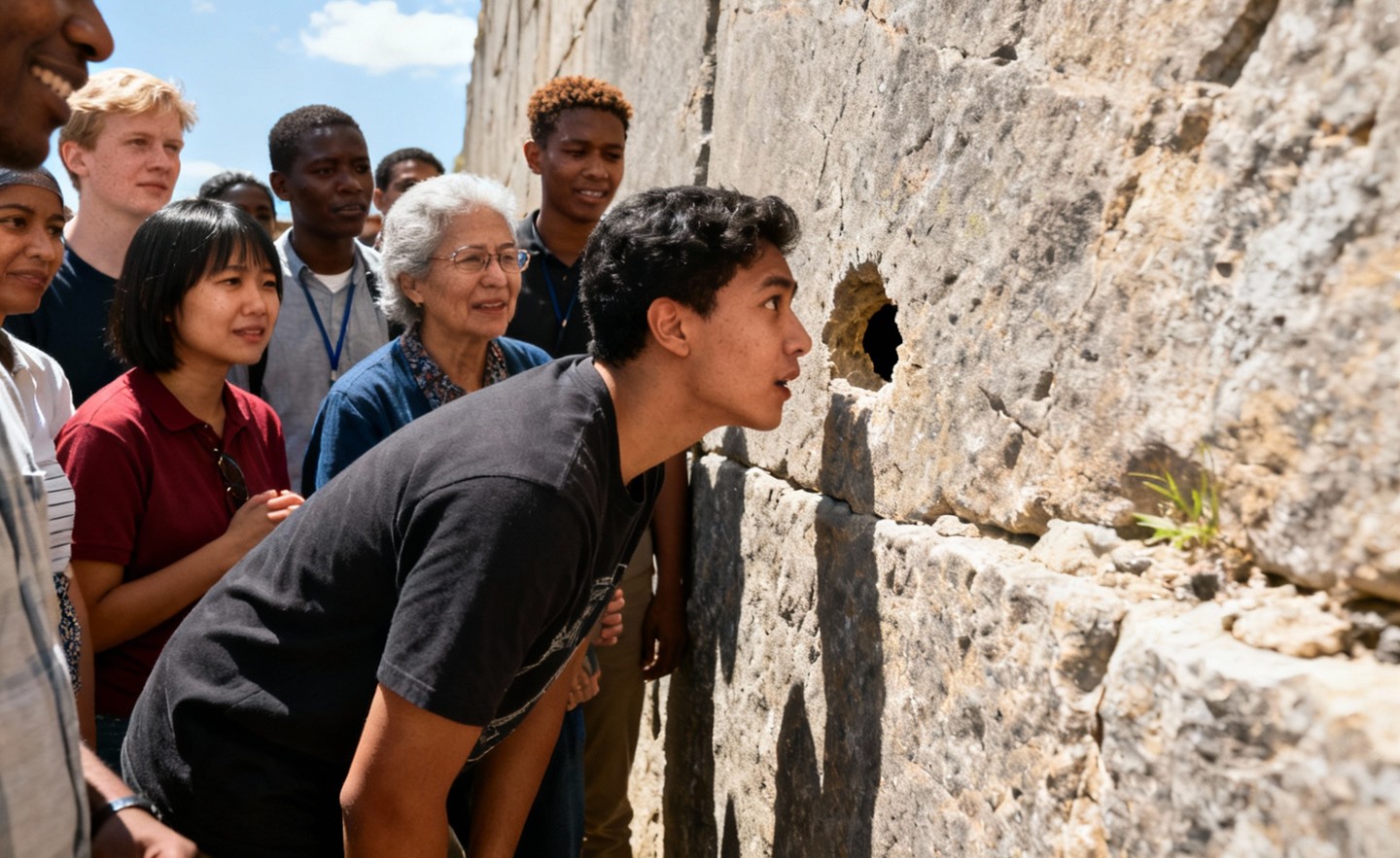
One day, out of curiosity, a group of
townsfolk dug a hole through the wall. When they peered through, they saw
droplets of water falling on the ground.
“Look!” they
cried. “It rains all the time in Riverton!”
Crowds gathered, peered through the same
hole, nodded and said:
“Yes. They
have an abundance of rain there. That is why their crops grow, and their land
is green.”
Soon, the story spread through Dryden.
In shops and cafes, people told each other how Riverton enjoyed constant
rainfall. Songs were written about it. Movies showed it, and children were taught
of their misfortune:
Dryden, the land of drought; Riverton, the land
of rain.
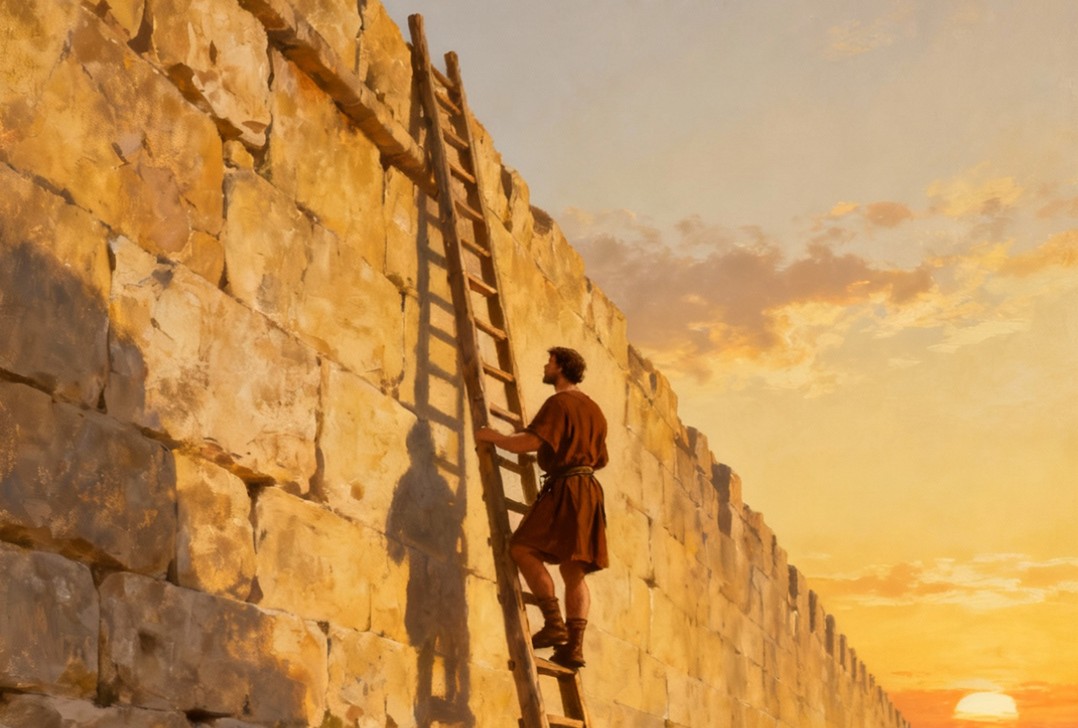
But then, one day, a man built a ladder.
His name was Maverick. He
climbed above the wall and looked properly into Riverton. What he saw surprised
him: it was not rain. The skies were clear, the fields green, and the mountains
majestic.
But the droplets they saw came not from
the sky, but from a raised tank that dropped water into the field, which, when
glimpsed through the hole, looked like rainfall.
Maverick returned to his people and
explained to them.
“It does not
rain all the time in Riverton. What you see is only water from a tank. Their
skies are not so different from ours,” Maverick told them.
But the people shook their heads.
“How can we
trust you?”
“Only one man
climbed the ladder. Hundreds of us have looked through the wall and seen the
rain with our own eyes.”
“Why should
we believe you over so many witnesses?”
…the crowd scoffed.
The story continued. Generations
repeated it as truth: Riverton, the city of endless
rain. The hole in the wall remained their proof. Anyone who doubted
was led there, shown the falling drops, and silenced.
Meanwhile, Maverick’s words faded like
whispers in the wind, for they had chosen their belief.
The people clung to the comfort of their
story: that while their land was dry, Riverton enjoyed endless rain.
Over time, even Maverick’s name was
folded into the tale. Parents told their children:
“A man once
claimed the rain was not real. He tried to deceive us. But the hole still shows
the drops, and the rain has never stopped. Let his folly be a warning.”
And so, the tall stone wall did more than separate the two cities: it divided truth from illusion. What began as curiosity in Dryden became conviction, and a lie repeated many times became the foundation of a social reality.
 Through the Hole or Over the
Wall
Through the Hole or Over the
Wall
Understanding Perspective and
Perception
We live in an age of information
saturation, yet we crave minimalism. We want everything in quick, easy bites. Fast
to consume, simple to digest, and ready to repeat. But the Rain of Illusion story reminds us
that our perspectives and perceptions often shape reality more than truth
itself. What we see, especially when it is partial or biased, can drastically
distort our understanding of the world.
Just like the people of Dryden, we face
a high wall of an information gap on issues. Whether it is information about
health, food, relationships, or broader concerns such as security, peace of
mind, financial freedom, and social order, we long to know what lies beyond the
surface. These are complex issues, yet most of us approach them by peering
through small holes rather than climbing ladders.
In the quest for clarity, speculation
fills the gaps. We turn to what is popular, what is trending, or what is
repeated around us. We rely on media headlines, viral posts, or conversations
within our social circles. These fragments of information are easy to access
and comforting to share. Like the droplets seen through the wall, they seem
clear and convincing. But as the Rain of
Illusion story shows, what looks like endless rain may only be the
trickle from a tank.
The danger lies in mistaking fragments
for the full picture. Opinions repeated often enough begin to sound like truth,
and collective agreement can feel more reliable than lone voices that challenge
the majority. Yet, reality shows us that truth is rarely found at first glance,
and sometimes the unpopular perspective, the Maverick on the ladder, offers the
closest view of reality.
If we rely only on the narrow hole in the wall, we risk building a truth on illusions. But when we choose to climb higher for a clearer view, we discover that reality may be far different, and far more complex, than the stories we’ve been told.
 The Hole in the Wall
How Belief Shapes Perception
In the Rain of Illusion story, the people of Dryden responded
to their uncertainty not by climbing the wall, but by speculating about what
life must be like on the other side. From the very beginning, their curiosity
was satisfied with guesses, not with truth. This is often how many of our ideas
about the world are formed. Much of what we believe is not based on what we
have seen ourselves, but on what others have speculated, passed down, or
repeated with confidence. We rarely question these “hand-down truths,”
especially when they come from people or institutions we trust.
When the people of Dryden dug a small
hole through the wall, what they saw seemed convincing enough. Falling drops of
water, which they quickly concluded was rain. That hole became their “proof.” These
holes are the fragments of information we receive from the media/social media,
or other trusted agencies. A story gains traction because it is catchy,
dramatic, or repeated often. Examples include tales like:
“This food will make you live longer.”
“There are ways to lose weight while sleeping.”
“There is a study which proves that neighbours can’t be trusted.”
“There is testimony
of someone who started a café with one coffee bean.”
When these stories are repeated long enough,
the claims stop feeling like speculation and start sounding like fact. We often assume information is
reliable because media outlets employ professionals, or because trusted friends
share them. Yet even professionals can be swayed by bias, limited perspective,
or hidden interests.
Context is what separates fact from illusion. In the story, the people looking through the hole in the wall were not entirely wrong. There really were drops of water falling. Yet they were not entirely right either, because what they interpreted as endless rain was only water drops from a tank. This shows us that without climbing the ladder to see the bigger picture, partial truths can look like the whole truth. In the same way, a news story, a trending social media post, or even an academic paper can be accurate in what it shows but misleading in what it leaves out. To know the difference, one must go beyond the hole in the wall and climb the wall for a better perspective.
 Echoes
of Belief
Echoes
of Belief
The Art of Bias and Consensus
Belief and bias shaped the story of
Dryden. The people were predisposed to believe in Riverton’s rain because it
explained their own hardship - why their land was dusty while Riverton’s was
green. That belief became a lens, and once it was in place, every piece of
information that affirmed it was embraced, while anything that challenged it
was rejected.
Maverick’s testimony, though clearer and
more accurate, was dismissed because it contradicted the popular narrative.
This is how bias works. If we believe weight can be lost while sleeping, we
seek voices that affirm the view. If we dislike a person, no achievement of
theirs will change our perspective of them, even if they showed us favour. If
we are desperate for quick wealth, we listen to anyone who promises it can be
built from nothing.
Bias filters information and ensures we
only see what we already expect. Even when there were reports, posts, or
publications that support Maverick’s account, bias narrows the feed to
highlight only the stories of rainfall, and that becomes all the people will
see and hear.
From the effects of bias comes the
danger of echo chambers. In Dryden, the tale of constant rainfall was repeated
so often through songs, plays, and conversations, that it became the only story
people knew. The number of believers gave the illusion of truth. Echo chambers
form when we surround ourselves with like-minded voices, whether through social
media feeds, curated news sources, or close-knit circles of agreement. Opinions
grow louder, but not necessarily truer.
Groupthink takes over from echo
chambers, making it harder to recognize errors or alternative perspectives.
Availability bias also creeps in. We start to judge what is normal or universal
based only on what is common in our own environment. Over time, this narrows
our world into a bubble of homogenous views. The lone voice of Maverick that
disagrees is dismissed as a “conspiracy theory,” delusional, or even dangerous.
Furthermore, when belief, bias, and
repetition converge they form a trap. A story told often enough within a closed
circle, begins to feel like the only possible truth. The more voices echo it,
the harder it becomes to question. Over time, people stop asking whether a
story is accurate and instead measure truth by how many agree with it. In the
era of AI, algorithms intensify this effect by feeding us more of the same,
pulling similar stories and topics until we start to feel that the story is
everywhere. This is the trap of the false consensus effect.
Just as the people of Dryden assumed everyone knew Riverton was the land of eternal rain, people immersed in a social media thread, or close-knit community of agreement may begin to think, “Everyone believes this, then it must be true.” But their sample is narrow, shaped more by proximity and repetition than by reality. In the same way, a group of academics and professionals, not in touch with reality, may circulate an idea only within their own circle, discussing and affirming it without broader review. Mistaking agreement within the group for public consensus. They are then surprised when the wider public resists. They often respond by dismissing or labelling critics. This highlights the danger of the false consensus effect.
 Climbing the Ladder
Choosing a Wider View
The story of Dryden shows us how easily a
narrative can form around an illusion, and how difficult it is to break free
once belief hardens into an identity. The easiest path is often to accept the
first story we hear and have come to accept. We prefer to stay in our comfort
zones because the views feel satisfying. The stories are easy to repeat, and
easy to believe. But like the people of Dryden, we risk mistaking waterdrops
from a tank for endless rain.
Finding a ladder means daring to go
higher, even when it feels uncomfortable. Like Maverick, who chose to climb
rather than stare through the hole, we too must take steps that others may
dismiss. It is not about chasing quick solutions but about building steady
habits. Choosing movement over shortcuts, balance over quick fixes. It is about
asking harder questions.
The ladder is not always glamorous, but it offers a truer view. Each step, like Maverick’s climb, brings us closer to seeing clearly, beyond illusions, and toward a reality rooted in clarity and truth.
 Reflection
The tragedy of Dryden was not the wall,
nor even the drops from the tank, but the choice to believe the easier story.
Peering through a hole was familiar, and familiarity felt safer than the effort
of climbing higher.
We trust shortcuts because they promise
results without sacrifice. We echo the crowd because it feels risky to think
differently. Yet, as long as we look through the hole in the wall, we will
never see the bigger picture.
Like Maverick, we have the choice to
climb. Sometimes, the climb is as simple as reading more deeply, asking harder
questions, or taking action for a change.
The wall is real, but it is not the problem. The stories we believe are powerful, but they are not set in stone. Freedom begins the moment we choose to climb for ourselves and see reality as it truly is.