
 The Seaborne’s Island
The Sea Seraph had set sail on a bright
morning, her white sails catching the wind like the wings of a swan. Joy and laughter
rolled across the deck as passengers spoke of the new land ahead. It was a time
of high spirits. They believed they were leaving behind uncertainty for a place
where all could thrive.
Captain Seaborne Veylan walked among
them in his elegant coat, nodding with pride.
“We are bound for a future of plenty,” he
declared.
And
the crew cheered.
But, a
storm came without warning. Black clouds closed in. Winds tore the sails, and
the ocean swallowed the ship. When morning broke, the survivors awoke on the
sands of a deserted island. Among them was Captain Veylan, who quickly took
charge.
They
had salvaged a few crates from the wreck, such as tools, fishing lines, seeds,
blankets, and a pen of livestock. The captain claimed these for ‘safekeeping.’ While
others built makeshift shelters of palm leaves and stitched sails, Captain
Veylan spoke of a grander vision.
One
day, he announced:
“We will build a High
Tower as our light lighthouse.
Tall, proud, and beautiful; so that ships will see it and come to our rescue.”
And
so, instead of making homes for all, he began building for himself. He used the
planks from the wreck, the strongest rope, the metal fittings, and even the
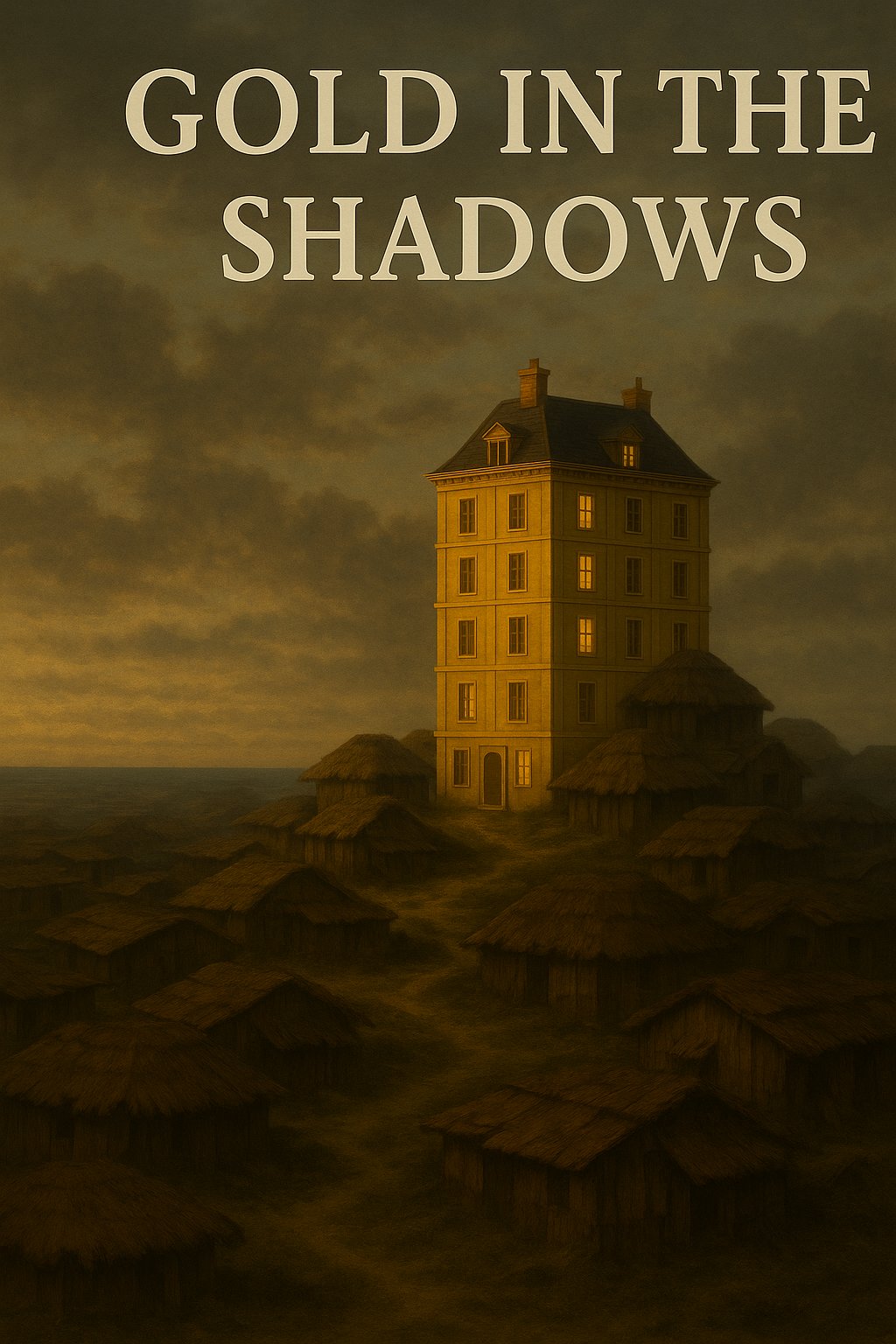
last panes of glass. His “High Tower” rose high above the thatched
huts and palm trees on the Island. The walls were painted in bright colours,
finished with polished brass and smooth varnish until they gleamed in the sun.
Anara, clutching an old blanket of stitched
sailcloth, asked,
“Captain, why not share some of the building materials for our shelters?”
Captain
Veylan beamed with a smile, almost pitying her, and said:
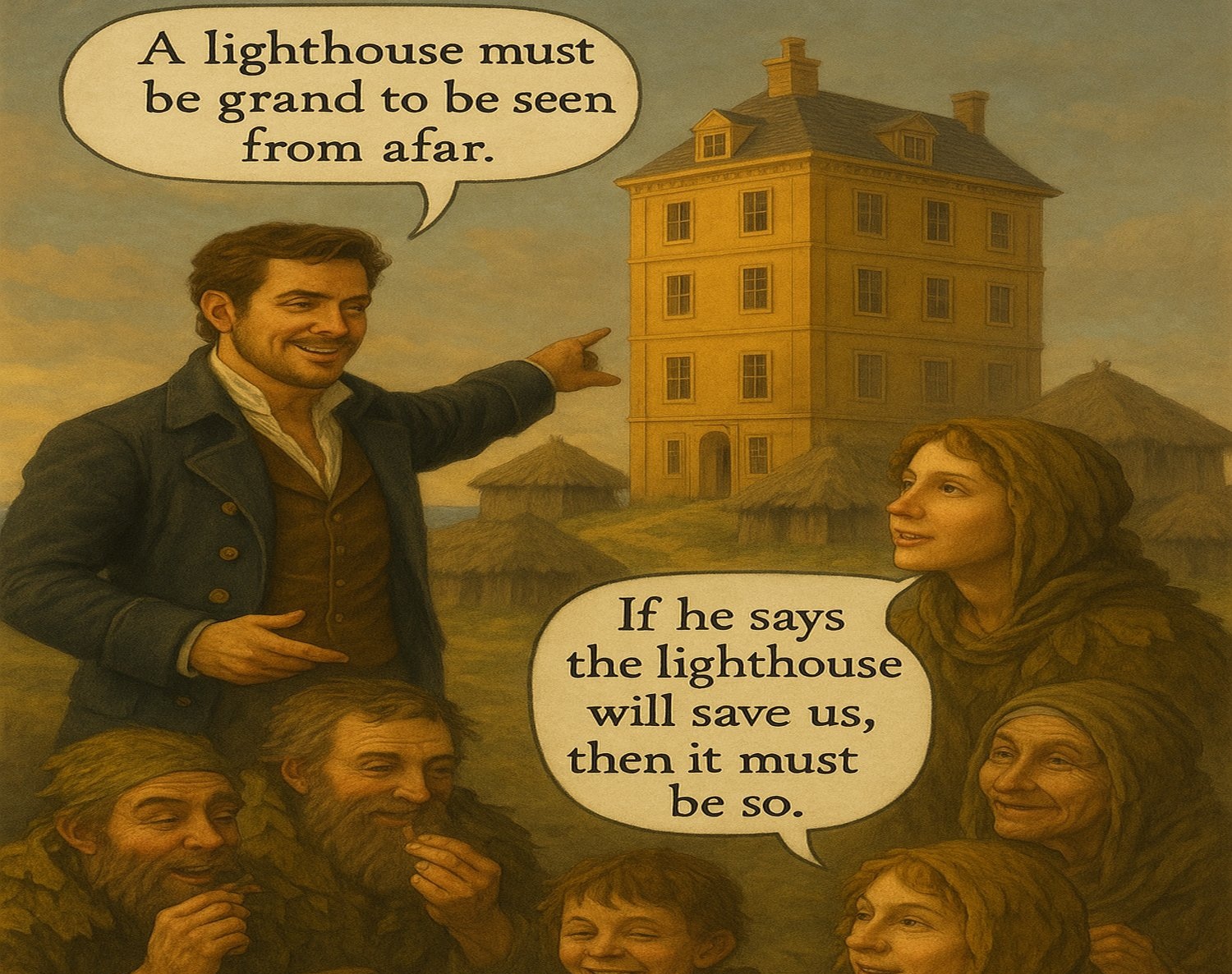
“A lighthouse must be grand to be seen from
afar. If we waste the materials on small huts, no ship will notice us. This
house, this beacon, will save us all.”
Inside
his “High Tower,” he kept the fishing gear and small boats, farming tools, and
cooking pots. The rescued livestock: the goats, chickens, and sheep, grazed in
a fenced pen behind the house. From the sheep’s wool, he made coats for himself
and his family, while others shivered, wrapped with leaves and scraps of old
sailcloth. When storms came, they huddled together under dripping thatch, but
the Captain’s children slept warm, their bellies full of roasted mutton.
Daran, a fisherman, finally asked, “Captain, could we not use the nets and
small boats to catch fish for our families?”
The Captain’s
face clouded with deep, rehearsed concern, said:
“If we squander them now, what will we use
when we get to the new land? You must endure. Eat the grasshoppers you catch.
Sacrifice today, for rescue comes tomorrow.”
And
the people nodded, for he alone “knew the seas and the new land.”
But,
what they did not know was this. Some nights, in the quiet of the moonless
dark, a small boat slipped away from the Captain’s cove. His family rowed
silently into the dark water, bound for the mainland. They returned with food,
clothes, and spices; enough to keep their table full, their bodies warm, and
their house fine for a season.
When
asked about this, the Captain replied,
“They go in search of a rescue ship. They
risk their lives for you.”
And
the people wept with gratitude.
After
many complaints about the Island’s cold, Captain Veylan made a great show of
generosity. He brought out some building materials from his reserves and some
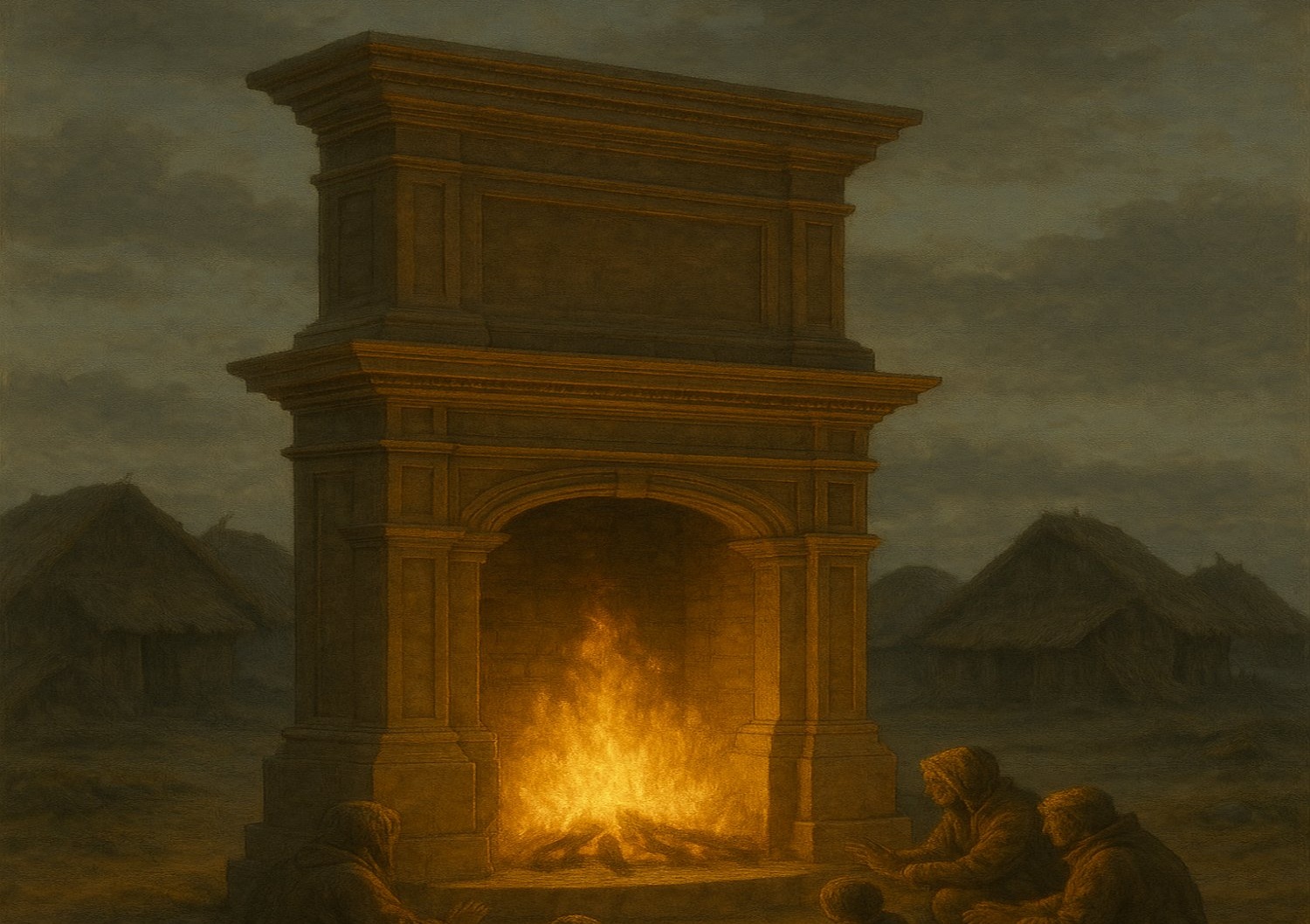
goods his family had fetched from the mainland. From these, he built a massive
fireplace in the centre of the Island. It was taller than a man, and wide
enough to fit ten around it. The fire blazed brightly every evening, and people
gathered there for warmth.
The
cost of this single fireplace could have built a hearth for each family on the
island, but that would have required better huts, sturdier roofs, and more
tools to build. Instead, the grand central fire became a daily ritual: the Islanders
walked miles from their homes to warm themselves, then returned to their cold,
damp shelters each night. Still, they believed it was a gift of the Captain’s
generosity; proof that he cared for them.
Kelvar and Mira, two of
the Captain’s loyal supporters, proclaimed, “No one else could keep us safe
like the Captain! We are fortunate to have such a leader.”
Daran
muttered to Anara, “Fortunate? Look at us, eating grasshoppers while his
children eat barbecued meat and fresh bread.”
But
Anara only shook her head and said.
“If he says the High Tower will save us, then
it must be so.”
And
so, the seasons turned. Around the only glittering tall house on the Island lay
a camp of ragged, thatched tents.
The
people clung to the hope that one day, the beacon would call their rescue.
They did not see that it was never built to light the way for them; it was only
built to glorify the man who ruled their island.
 From Island Beacon to
Illusion
From Island Beacon to
Illusion
The Seaborne’s Island Tale is not just an
allegorical story; it is a mirror held to our world, and what stares back is
unsettling. Many societies often set out like the Sea Seraph: sails full of
hope, optimism, and dreams of a shared and abundant future. The horizon seems
open, the course is clear.
But in life, as at sea, storms arrive. Sometimes in the form of civil wars, economic collapse, political
mismanagement, or renewed inequality. For people emerging from a dictatorship, war,
pandemic or systemic collapse, such storms can derail the fragile promise of equity,
replacing hope with new forms of injustice. Such tempests do more than wreck
ships; they fracture societies, erode trust, and create a vacuum for a “Captain”
to step forward in the situation.
These “Captains,” whether political
leaders, business figures, or entrenched elites, arrive not as fellow survivors
but as self-appointed saviours. They present themselves as the only ones with
the maps, the skills, and the experience to chart a way out. And just like Captain
Seaborne, their first act is often not to build secure shelters for everyone,
but to claim the best resources to construct their symbols of prestige. Here
lies the essence of Gold Shadowed Poverty: the deliberate creation of
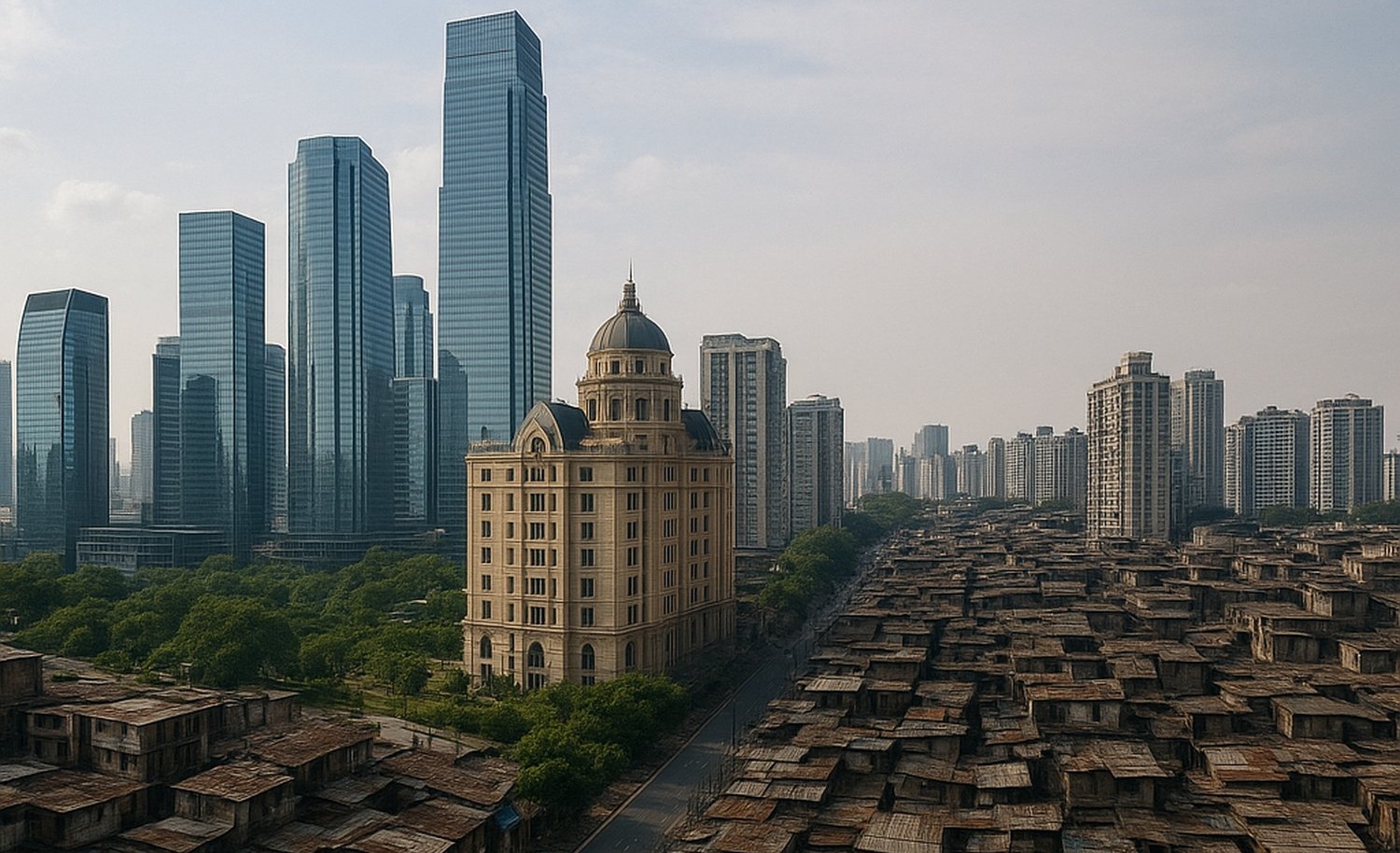
gleaming symbols of “progress,” such as the High Tower, which shines brightly
against a backdrop of deprivation.
A few pockets of success stand out while
the rest of the population remains in hardship. They represent a monument that is
admired from afar, often overshadowing the poverty that surrounds them, and
sometimes deepens them. They are built not to solve the structural hardships,
but to project hope, and the supposed vision of their creators, the elites.
Gold Shadowed Poverty thrives on
contrast. It needs the suffering of the people to make the gold seem
miraculous. And as long as people keep looking only at the beacon, they will
never notice that the islanders remain stranded.
 How the Lighthouse Keeps the
Island Cold
How the Lighthouse Keeps the
Island Cold
The Seaborne’s
Island Tale doesn’t just show what Gold Shadowed
Poverty looks like. It reveals how it is sustained. The process is not random.
It repeats in a series of predictable steps, each reinforcing the next. They
keep the islanders trapped in a loop where the gold gleams, while the people
remain in the dark.
At the
onset, a storm resets the Game. Every
cycle begins with a disruption, a crisis, or a collapse that creates fear and
uncertainty. In the story, the shipwreck strips the survivors of security. These
are often systemic uncertainties or crises, such as economic collapse, pandemic,
political turmoil, or war. In the chaos, people look for a way out, setting the
stage for the captain’s rise.
The
first move is for the elites to seize control. With
the public’s attention fixed on survival, leaders quietly centralize control
over the essential tools of wealth creation and decision-making. Captain Seaborne
hoards the fishing gear, boats, and livestock ‘for safekeeping.’ Likewise,
assets such as land, capital, and the means of production, as well as the
rights to operate through selective licenses, exclusive contracts, or
restrictive policies, are placed under the control of a few elites. These
practices are always justified as necessary “for the greater good.”
Next is
the Grand Project. Instead of addressing immediate,
widespread needs, an isolated high-profile project is launched, often seen as
the ‘lighthouse.’ The supposed lighthouse becomes the showpiece, the symbol of
progress. These are often used to showcase the leadership’s supposed effort at ensuring
the system is prepared for growth, while critical areas such as education, public
health/safety, and security are neglected. The welfare of the political class
takes precedence, such as their wages and benefits. Policies prioritize the
interests of the political and business class over the welfare of the majority.
Then,
the sacrifice narratives follow. People
are told to endure present suffering for the sake of future redemption. “Eat
grasshoppers today so we can be saved tomorrow,” says the Captain. The timeline
for the supposed redemption is elastic; constantly shifting just far enough
away to keep hope alive, but real change is out of reach. Any questioning is
branded as disloyal or short-sighted.
The secret
channels of privilege are established. While
the masses sacrifice, those in power enjoy private supply lines and safe
havens. The captain’s family rows to the mainland for food and comforts each
season, while the islanders shiver. Elites in developing countries or
challenged economies send their children abroad, invest in offshore businesses,
and maintain escape plans, all while telling their people that resources are
scarce.
Business leaders make similar offshore
investments and ship jobs overseas, benefiting only themselves, while leaving
their societies to suffer economic hardship. They claim these investments will
someday bring back a ‘rescue ship.’ To justify this, they employ manipulative
framing: “They risk their lives for
you,” suggesting that foreign investments are noble sacrifices.
They also make the people believe that life on the mainland is worse, and that they have it better on the island.
Then
comes the Token Gesture. Highly
visible, but strategically limited acts of generosity are used to maintain
loyalty. The captain’s grand fireplace is the perfect example. Impressive,
central, and symbolic, but far less effective than giving every family its own
hearth. These gestures are often timed for maximum political effect, creating
the illusion of care without delivering required structural changes. Media
coverage amplifies this illusion, airing documentaries of isolated success
stories to suggest that the towering project will one day translate into
prosperity for all the islanders.
Finally, there is the enforced gratitude. The cycle is sealed by propaganda
and loyal supporters who police dissent. Praise becomes a civic duty;
questioning becomes betrayal. Kelvar and Mira, in the story, praise the Captain’s
leadership, drowning out Daran’s doubts.
This cycle is self-sustaining. The
people forget that the High Tower and the fireplace were built from their own
labour and resources. As long as the High Tower and the fire dazzle, no one
notices that the islanders are still cold and still waiting for a rescue that
was never truly coming.
 Lessons Beneath the Lighthouse
The concept of Gold Shadowed Poverty thrives because it dazzles. The High Tower’s gleam often hides the ragged huts
around it, turning deprivation into the backdrop that makes the gold seem
brighter.
Instead of drawing attention to the
desperate living conditions of the islanders and their calls for help, the
narrative focuses on tales of hope and resilience. The media talks about the
courage of a people who survived a shipwreck. The islanders are praised for
coming together to build a fireplace. Their unity is celebrated as a triumph.
From the outside, observers see only the
glow of progress: the towering beacon and the massive fireplace at the island’s
centre. The media reinforces this image, telling stories of how the fireplace
fosters unity and warms the people’s hearts, while ignoring the fact that most
still sleep in cold, damp shelters.
These illusions are not accidental; they
are carefully staged performances. They take the form of mega-events, where a
leader hosts global summits or sports tournaments, while critical
infrastructure remains underfunded. They appear in centralized Marvels: a
single “world-class” hospital in the centre, built to set records as the
largest in the region, even as rural communities go without basic clinics. They
are perpetuated through media spectacles in which leaders are photographed
donating aid or inaugurating new buildings, while systemic problems, such as
failing public infrastructure, remain untouched.
People in poor communities, especially
in poor countries, are coerced into surrendering scarce resources for monuments
that glorify the elite. These structures, whether cultural, religious, or civic
buildings, stand as elegant symbols amid communities still struggling with
sanitation, health, and livelihoods.
When building their High Tower, the
elites cloak their self-serving projects in words like; “empowerment,”
“protection,” “inclusive,” or “care.” A few beneficiaries are showcased
(symbolizing the Fireplace), to create the illusion that the marginalized are
included, while the benefits flow upward to the elites and their friends.
Illusion in this context works because
it is an emotional form of theatre - it gives people something to point to as
evidence that their sacrifices matter, even when the underlying conditions
remain unchanged. And because the Captain appears to be doing something, many
hesitate to risk what little security they have by questioning his decisions.
From this story, three truths emerge.
First, accountability
is non-negotiable. Without transparency on where resources go and who truly
benefits, the High Tower is nothing more than a monument of exploitation.
Second, informed
discernment is critical. People must learn to discern when gold is merely a
shadow and not a genuine promise of progress.
Third, community
stewardship is essential. When resources are managed collectively, the
islanders can build many shelters, rather than one grand beacon reserved for
the Captain’s glory.
The greatest danger in the story is not
the Captain’s greed. It is the people’s willingness to believe the illusion. The
fear that only the captain knows the seas, and the belief that “this is how it
has always been,” keep the Captain’s house up. And the High Tower remains, even
if it was never meant to help the stranded islanders.
 Reflection – Breaking The
Cycle
Reflection – Breaking The
Cycle
The cycle of Gold Shadowed Poverty will
continue until the islanders, the people, recognize the illusion for what it
is. They must realize that survival does not come from the High Tower, but from
their own capacity to organize, demand accountability, and collectively decide
on their path.
They will have to ask hard questions:
Do we want to
stay on this island, or set sail again?
If we stay,
how will we share and manage resources?
If we sail,
how do we ensure every person has a voice in the journey?
The truth is glaring: no rescue ship is
coming unless the people themselves build it. And no beacon, no matter how
grand, can substitute for equity and shared power.
The island belongs to all the islanders.
When it is guarded for the benefit of a few, poverty will always stand in the
shadow of gold. Both the captain and the islanders should remember this:
“To be wealthy and honoured in an unjust society is a disgrace.” Confucius.