


 Sold To The Wind
In the city of Pryce, where stories
travelled faster than footsteps, Jake Vane was known for his grasp in the world of finance.
Numbers worked in his favour,
and so did the clients who trusted their future to his charts and forecasts.
One day, out of curiosity, he began
recording short videos: simple tips about saving, investing, and avoiding debt.
He spoke into the camera as if speaking to a friend. People listened. The
numbers in his follower count began to grow.
Then came the call from a media agency.
“You have a talent,” they told him. “We
can get you bigger audiences, bigger income.”
The gigs began as small campaigns: brand
endorsements and talk show panels. But the crown jewel came in the form of an
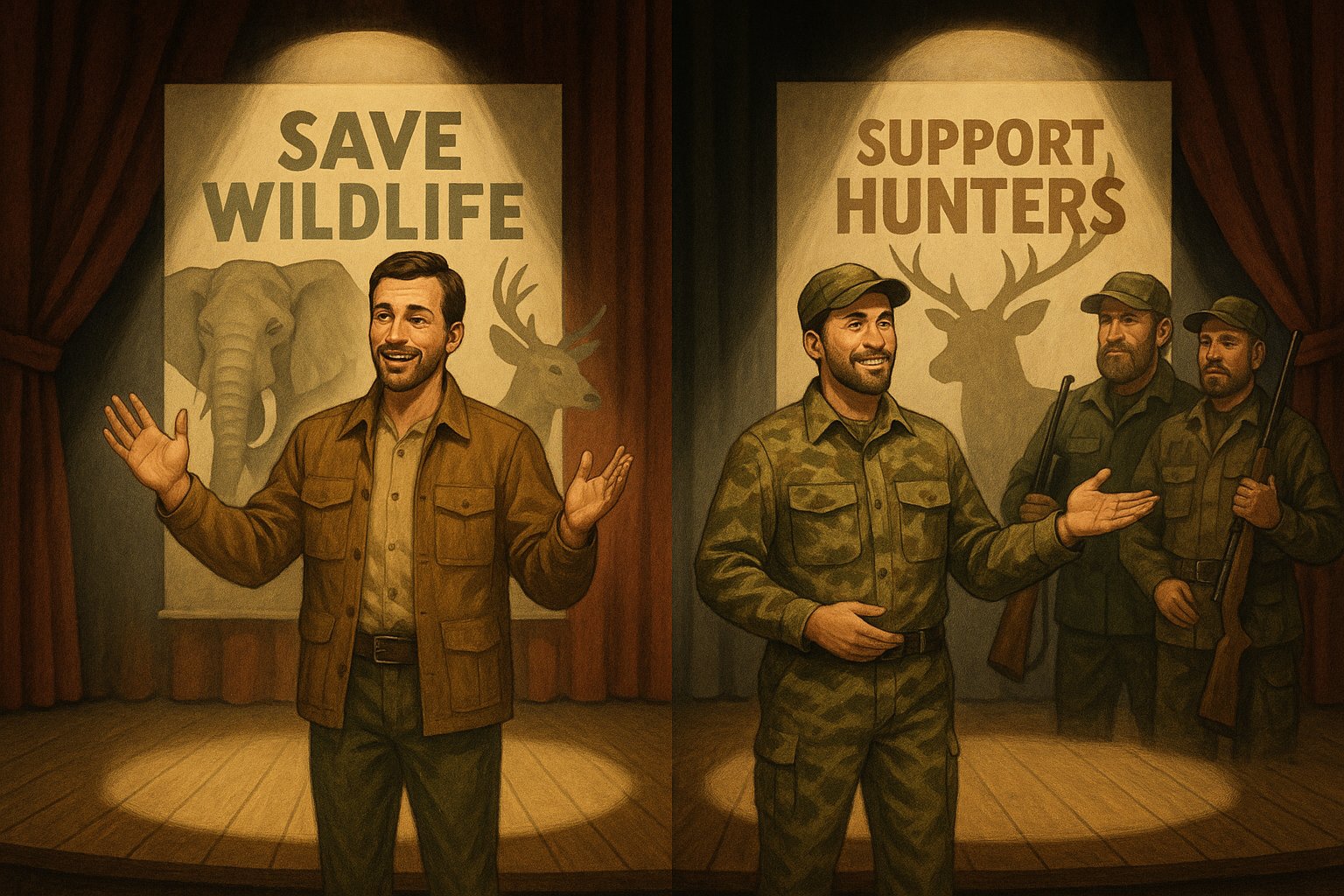
advocacy campaign: Save the Wilds.
The cause was urgent. Rare animals were being slaughtered by both hunters and
poachers. Jake, now dressed in earth-toned jackets, spoke with passion in his voice about
protecting the creatures of the forest.
The campaign went viral. Documentaries
featured him. Schools invited him to speak. And the agency paid him more than
he had ever dreamed of.
The life was intoxicating. So, he quit his finance job.
For years, he was the face of the cause.
Children sent him drawings of elephants and rhinos. He raised funds for
sanctuaries, signed petitions, and posted fierce messages condemning the
“butchers of the wild” on his social media accounts.
But then, one season, the agency’s
funding dwindled. A
change in political winds had dried the river of sponsorship. Jake’s inbox grew
quiet. The invites stopped. Bills began to stack like bricks in a crumbling wall around him.
The thought of returning to finance felt
like moving back into a cold, grey prison.
He was a different man now, or at least, he had convinced himself he was.
Then came the knock on his door.
It was the Hunter’s League. The very
people he had spent years denouncing. They had seen his decline.
“You have influence,” their leader said.
“We can make use of it. You’ll tell our story. The truth about our way of life.
We’ll pay you well.”
Desperation dulled the edges of his
conscience. He agreed.
Soon, Jake was online again. Smiling
beside men in camouflage, praising “sustainable hunting” and “the ancient
rights of the hunt.” The audience who once cheered his rants against hunters
now watched in confusion. Comments flooded in:
“What happened to you?”
“Didn’t you call them criminals?”
Jake said nothing. Yet, the irony is profound. He
sees himself as a man of principle. In his world, he stands firm and speaks
with passion about what he believes. To him, that is proof that he is true to
himself, even if the self he is true to kept shifting.
Meanwhile, the hunters and those who
enjoyed their game adored him. Invitations poured in. Payments followed.
Even the poachers, sensing an opportunity,
began offering him gigs to “clear the air” about their work and how they were also feeding communities.
He accepted those, too.
From the outside, Jake looked alive
again: busy, booked, smiling in every post. But inside, he was hollow. His soul
felt like a theatre that had been emptied after the final act. Its stage now
leased to whoever could pay the rent. It has a theatre owner, so desperate, he would rent the stage by the minute
to street hawkers.
And in the quiet moments, darker
questions whispered in the minds of those who still remembered the man Jake
used to be:
Why does he do this?
Does he have a soul?
What comes next?
Would he, if the money was right, stand
in the square and praise the raiders who stole the meat from the very hunters
he now defended? He could argue
that, after all, the raiders shared their spoils with the hungry.
In Pryce, no one could say for sure. But, one thing they knew: Jake Vane had become a man who didn’t follow causes. He followed currents. And currents, like trends, change without warning.
 A Talent Adrift
“If you don’t stand for something, you’ll fall
for anything.” – Malcolm X
Jake Vane’s story began as a talent
meeting opportunity. A gifted analyst with the trust of clients who stumbled
into public visibility. The real turning point wasn’t fame; it was the pivot.
He shifted direction because of an offer, driven by necessity rather than
principle. As a result, performance replaced purpose. The stage was still his,
but the script was for sale. That journey exposes a modern pathology: trend jerking, the act of
seizing causes not from conviction but from the pull of crowds, sponsors, and the
spotlight.
Jake’s story illustrates how easily a talent can be captured by external interests, and how quickly a cause can be reduced to mere content. It illustrates how passion, without guiding values, can drift. When offers steer a stance, the wind owns the sail.

 The Anatomy of the Drift
Trend jerkers aren’t simply fickle
influencers. They are what happens when visibility outpaces values. The talent
remains; in Jake’s case, a sharp mind and persuasive voice, but once attention
becomes the currency, the cause becomes negotiable. From the outside, it appears
to be adaptability; however, on the inside, it’s a lack of stability.
Jake began in familiar territory,
producing financial content. The problem was not branching out, but going all
in on a new area and abandoning what he knew. His entry into a cause came not
from lived experience, deep insight, or new revelation. It was because the
opportunity was available. Jake’s credibility in finance earned him a platform;
the wildlife campaign handed him a script. Without roots, influence rests on
stage props.
If Jake had ventured into the financial
side of wildlife conservation or entered the wildlife campaign space while
still anchoring his core work in finance, the drift might never have occurred.
He would have had a natural fallback, and returning to finance content would
have been an easy and credible shift.
Jake’s story is a cautionary tale of a
dangerous pattern in the online world. Individuals spot topics that draw
attention and quickly dive in with little understanding of their complexities.
They pursue impressions, likes, and comments, especially on emotive and
controversial issues that thrive on crowd appeal, without forming genuine
convictions.
Like Jake, many hop from one trending
topic to the next, not as a natural progression, but purely to capture a new
audience: reshaping their stance each time the crowd changes.
Another hallmark of trend jerkers is stance shopping: adopting and
discarding positions like gigs. When support shifts, so does the stance, not
because of new evidence, but because a different audience is paying attention.
Jake didn’t evolve his view on conservation, he switched sides to match the
payout.
Trend jerkers allow performance to replace practice.
True conviction fuels the work of advocacy. Performance chases optics: panels,
high-profile appearances, viral posts. Over time, identity becomes sponsor-focused. Jake’s rhetoric slid
from “butchers of the wild” to “ancient rights of the hunt,” mirroring his new
supporters’ appeal and preference.
The drift in stance is usually bound
together by self-justification.
Passion is mistaken for principle: “I feel this strongly now, so it must be
right.” Rhetorical lines drawn for applause are used, which shatter when
incentives change. If the next loudest buyer can purchase the platform, the
earlier stance is revealed as a costume.
Jake’s pivot exposed an existing
emptiness within him, a lack of movement without a compass. This doesn’t mean
people can’t change, but genuine growth is slower, accountable, and
transparent. It begins with honesty, which says: “Here’s what I learned; here’s
what I got wrong; here’s what I’m doing differently.”
When opportunity outruns origin, when the crowd ghostwrites, and when metrics masquerade as morals, advocacy becomes a theatre. The skepticism it breeds doesn’t just harm the performer; it burdens every honest voice that follows.
 The Damage Beyond the Drift
The damage from trend jerking runs far
deeper than a tarnished public image or a passing controversy. Its effects
ripple outward, touching the individual, the causes they champion, and the
wider society. These consequences can be seen on three fronts: to the person, to genuine causes, and to society at large.
To the
person. The cost begins with identity fragmentation. Selling
contradictory scripts forces constant rationalization and emotional
compartmentalization. The result is a performer with a full calendar and an
empty core. Like a theatre still lit, but with nothing true being staged. Over
time, this hollowness breeds emotional distress and quiet indignity, as purpose
gives way to survival performance.
Sustaining a false narrative requires
constant self-deception, which corrodes self-esteem and creates deep inner
conflict. If that tension is left unresolved, it can lead to self-destructive
coping behaviours. In Jake’s case, the strain might drive him to lash out,
turning petty or combative toward Save the
Wilds, and even unrelated groups. Instead of focusing on
promoting the Hunter’s League, his energy would spiral into attacking
anyone perceived as an adversary. And, as with any conflict left unchecked,
such battles inevitably harm bystanders and claim innocent casualties.
To
genuine causes, the harm is structural.
Complex problems are reduced to marketable soundbites. What is solvable becomes merely sellable. Genuine grassroots work,
the kind that doesn’t photoshop well, is starved of attention and resources. At
the same time, high-visibility optics dominate the market.
In some cases, the fallout from Jake’s
own internal battles causes further damage. The flaws he publicly assigns to Save the Wilds end up staining
the public image of every similar cause. This fuels a cycle of credibility
collapse. Each public U-turn teaches audiences to view advocacy with cynicism
rather than trust. The next honest voice to speak out inherits suspicion,
tainted by the memory of Jake’s opportunism. As a result, focus shifts from
interventions that achieve real change to those that merely look good on
stage or screen.
To
society. Especially in contexts of gilded
deprivation, the danger is profound. In such environments, elites maintain
systemic inequality and neglect through carefully constructed appearances of
progress. Trend jerkers become tools in this strategy, amplifying the illusion
and providing reputation laundering in exchange for payment. Their sudden
reversals weaken public resistance, turning healthy skepticism into paralyzing
cynicism. Authentic reformers and activists are then forced to spend valuable
time and energy proving they are not for sale before they can even begin
building trust or momentum. Meanwhile, well-funded narratives dominate the
conversation, drowning out the voices closest to harm and leaving the oppressed
quieter, more compliant, and easier to control.
Jake’s pivot clearly illustrates the patterns described. The issue wasn’t that he changed direction. It was that the change was driven by an enticement, not by insight or conviction. The greatest danger of a cause without conviction isn’t merely its emptiness; it’s the harm it inflicts. Such shifts actively strengthen the very forces the cause was meant to challenge, giving the hostile forces credibility, reach, and momentum they might not have achieved on their own.
 Reflection: Anchoring the Sail
The heart of Jake’s story is not
betrayal; it’s the drift. His downfall was never simply that he changed lanes. It
was that he allowed the strongest current to choose his course. Talent without
governance is vulnerable to capture, and once captured, it becomes an amplifier
for whoever can pay the fee. Trend jerkers are like children handed a loaded
rifle. At first, the shooting may seem harmless, even exciting, until they
begin firing at anything in sight. In the process, they harm not only the cause
but also themselves and the society around them.
The safeguard is simple in concept but
hard: anchor before you sail.
When the destination is clear, storms don’t dictate the navigation. Legitimate
pivots grow from evidence, not expedience. And, they should be explained with
transparency.
Furthermore, impacts should be measured
by real changes, not trending hashtags. In advocacy, movement without a fixed
course is just drifting. In Jake’s world, the wind looked like freedom. But in reality,
it was a current without a compass, sweeping him toward whatever harbour would
take him in.
If the wind can buy your words, the wind owns your work.